
Rooftop Tent Rain Performance: Technical Analysis
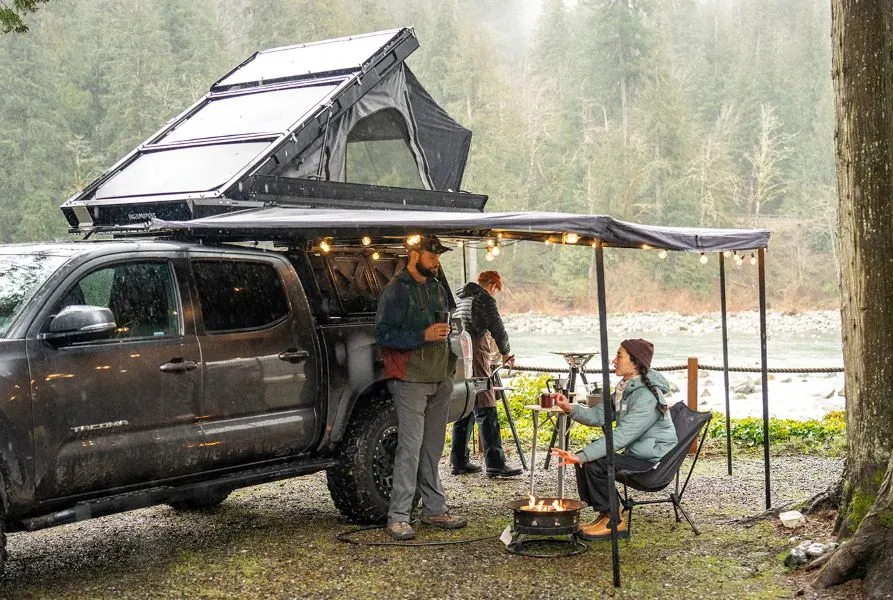
Rain Protection Is a System, Not a Single Feature
Effective rain protection requires integrated design across multiple tent components. Water infiltration occurs through predictable failure points that can be engineered to prevent moisture ingress.
Rain protection depends on material waterproof ratings, seam integrity, structural water management, and ventilation systems working together. Understanding these interconnected systems enables accurate assessment of tent weather capability.
Most rain infiltration occurs through four primary pathways:
Fabric Permeability
Quality tents require minimum 3,000mm waterproof rating for walls and 5,000mm+ for floors. DWR coating creates water beading for rapid runoff, while UV-resistant materials prevent coating degradation over time.
Seam Failure
Stitched joints are the most common failure point. Taped or welded seams create waterproof barriers, while sealed zippers with storm flaps prevent water ingress at closure points.
Structural Water Management
Adequate roof pitch (minimum 30 degrees) ensures rapid water shedding. Integrated gutters channel runoff away from openings, while bathtub floor construction with raised edges eliminates ground water ingress.
Ventilation Integration
Breathable materials balance waterproofing with vapor transmission. Strategic vents maintain airflow during rain without compromising protection, preventing interior condensation buildup.
Performance Analysis by Construction Type
Different tent construction methods provide varying levels of rain protection based on material properties and structural design.
| Construction Type | Rain Resistance | Setup Exposure | Maintenance Requirements |
|---|---|---|---|
| Hard Shell | Excellent | Minimal (30-60 seconds) | Low |
| Soft Shell | Good to Excellent | Moderate (3-8 minutes) | Moderate |
| Hybrid | Excellent | Low (90-180 seconds) | Moderate to High |
Hard Shell Rain Performance
Molded shells eliminate fabric permeability concerns and provide integrated seals around openings. Rapid deployment (under 60 seconds) minimizes weather exposure, and no fabric maintenance is required. However, condensation control requires engineered ventilation, and thermal bridging can create interior moisture when temperature differentials exist.
Soft Shell Rain Performance
Advanced fabric coatings provide excellent waterproofing when properly maintained. Breathable materials reduce condensation while offering cost-effective protection. DWR coating requires periodic renewal, and seam integrity varies by construction quality. Extended setup times increase weather exposure during deployment.
Hybrid Rain Performance
Hard shell roofs eliminate fabric concerns in critical zones while soft shell sides provide breathability. Deployment is faster than full soft shell but slower than full hard shell. Multiple sealing systems between materials create additional maintenance requirements and potential failure points.
Summary
Rooftop tent rain protection effectiveness depends on systematic engineering approach rather than individual component specifications. Material selection, construction quality, and proper maintenance determine actual weather protection capability under field conditions. The elevated mounting advantage of rooftop tents provides inherent weather protection benefits over ground-based alternatives, but optimal performance still requires attention to technical specifications and proper system maintenance.
Find rooftop tents near you
Rent from local owners and try before you buy.